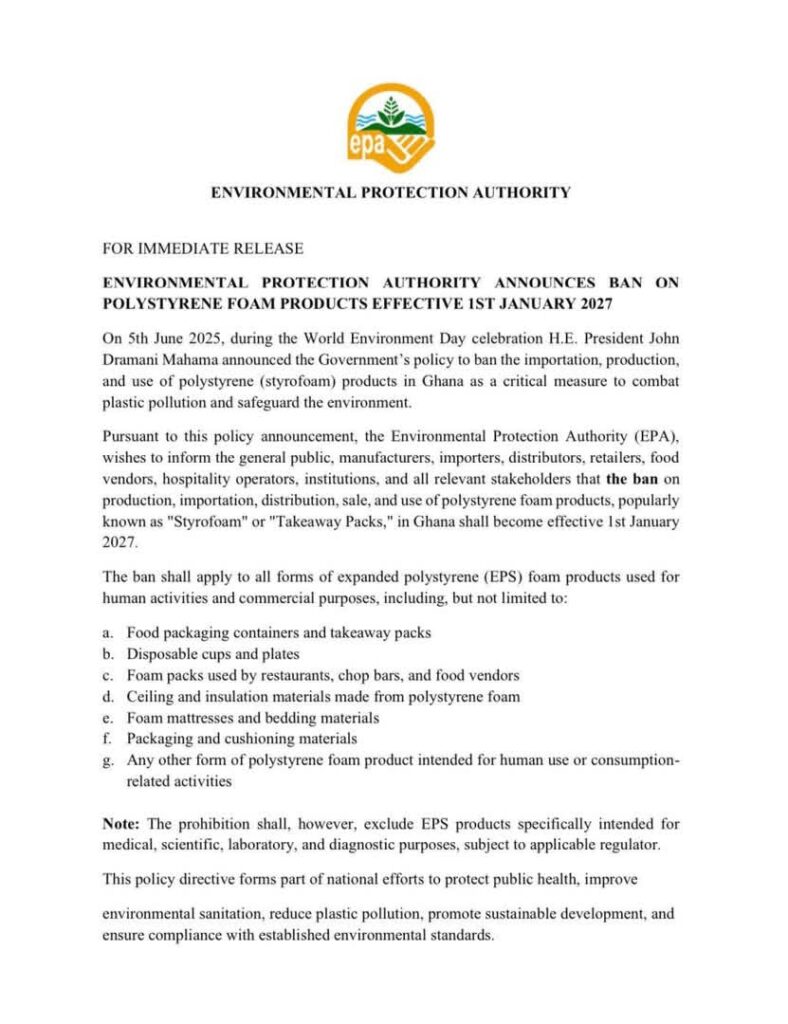
The Environmental Protection Authority (EPA) has announced a nationwide ban on the production, importation, distribution, sale, and use of polystyrene foam products commonly known as Styrofoam or takeaway packs starting January 1, 2027.
The directive, which applies to all expanded polystyrene (EPS) foam products used for both commercial and domestic purposes, forms part of government efforts to tackle plastic pollution and improve environmental sanitation across the country.
The EPA explained in a statement issued on Monday, May 25, that the decision follows a policy announcement made by President John Dramani Mahama during the 2025 World Environment Day celebration, where he outlined the government’s intention to eliminate polystyrene products from the Ghanaian market.
“The ban on production, importation, distribution, sale, and use of polystyrene foam products, popularly known as ‘Styrofoam’ or ‘Takeaway Packs,’ in Ghana shall become effective 1st January 2027.”
The ban covers a wide range of products, including food packaging containers, disposable cups and plates, foam takeaway packs used by restaurants and street food vendors, as well as polystyrene-based ceiling and insulation materials. It also extends to foam mattresses, bedding materials, and packaging or cushioning materials used in commercial activities.
However, the EPA clarified that certain exceptions will apply. It stated that:
“The prohibition shall, however, exclude EPS products specifically intended for medical, scientific, laboratory, and diagnostic purposes, subject to applicable regulation.”
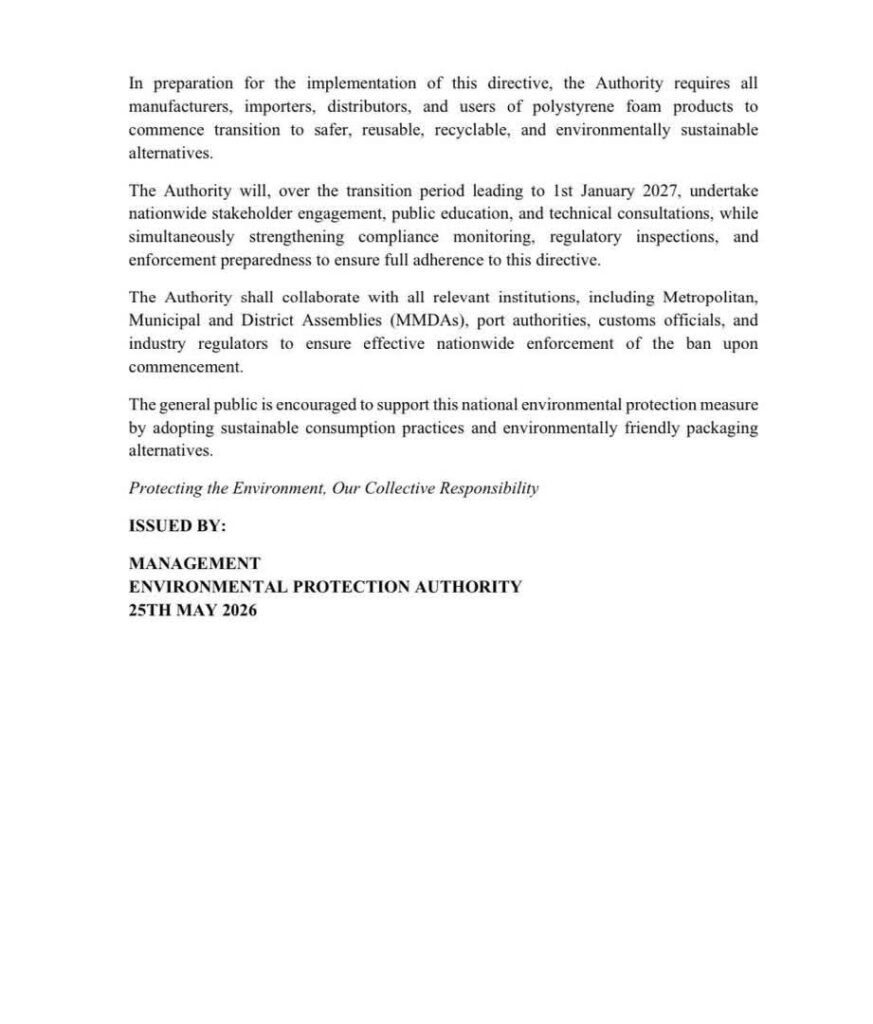
The Authority further noted that the policy is part of broader national efforts to promote sustainable development, reduce environmental degradation, and safeguard public health. Stakeholders, including manufacturers, importers, distributors, food vendors, hospitality operators, and institutions, have been urged to begin transitioning to environmentally friendly and reusable alternatives ahead of the enforcement date.
To ensure smooth implementation, the EPA said it will embark on nationwide stakeholder engagements, public education campaigns, and technical consultations throughout the transition period. It will also strengthen compliance monitoring and enforcement systems in collaboration with Metropolitan, Municipal and District Assemblies (MMDAs), customs officials, port authorities, and other regulatory bodies.
The Authority is encouraging the general public to support the policy by adopting sustainable consumption habits and reducing dependence on single-use plastics.
It concluded with a reminder that environmental protection requires collective effort, stating that safeguarding the environment remains a shared responsibility.