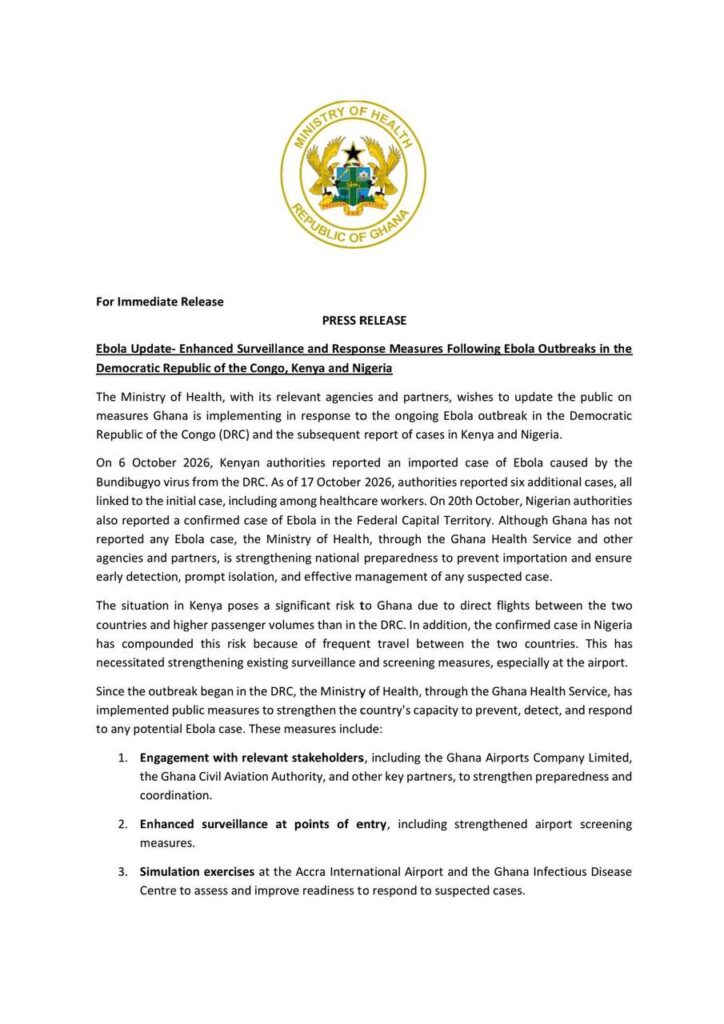
Ghana has intensified Ebola surveillance and screening at its points of entry following reports of confirmed cases in Kenya and Nigeria linked to an outbreak in the Democratic Republic of Congo (DRC).
The Ministry of Health has assured the public that Ghana has not recorded any cases of the disease, but is strengthening its preparedness to prevent the virus from entering the country and to ensure suspected cases are detected and managed promptly.
In a press release dated October 21 and signed by the Minister for Health, Hon. Kwabena Mintah Akandoh, the Ministry cited cases reported in Kenya and Nigeria as grounds for heightened vigilance, particularly at airports.
According to the statement, Kenya reported an imported case of Ebola caused by the Bundibugyo virus on October 6. By October 17, six additional cases linked to the initial infection had been reported, including cases involving healthcare workers.
Nigeria subsequently confirmed a case in the Federal Capital Territory on October 20, raising further concerns about the potential spread of the disease across the region.
The Ministry noted that direct flights between Ghana and Kenya, as well as frequent travel between Ghana and Nigeria, increase the risk of an imported infection.
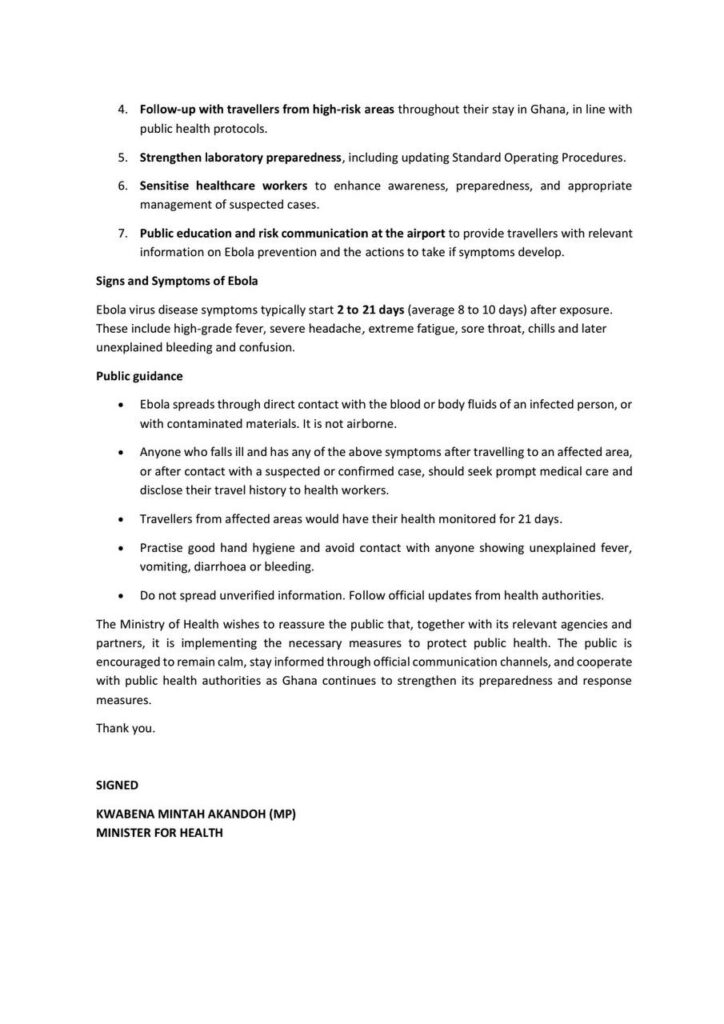
As part of the response, health authorities are strengthening screening at points of entry, improving laboratory preparedness and monitoring travellers from high-risk areas for 21 days.
The Ministry explained that Ebola symptoms may appear between two and 21 days after exposure. These include fever, severe headache and chills.
It also clarified that the virus spreads through direct contact with the body fluids of an infected person or contaminated materials, stressing that Ebola is not airborne.
The public has been urged to maintain good hygiene, seek medical attention if symptoms develop after possible exposure and avoid sharing unverified information about the outbreak.
The Ministry reiterated its commitment to protecting public health and assured Ghanaians that measures are being implemented to strengthen the country’s preparedness and prevent the disease from spreading into Ghana.