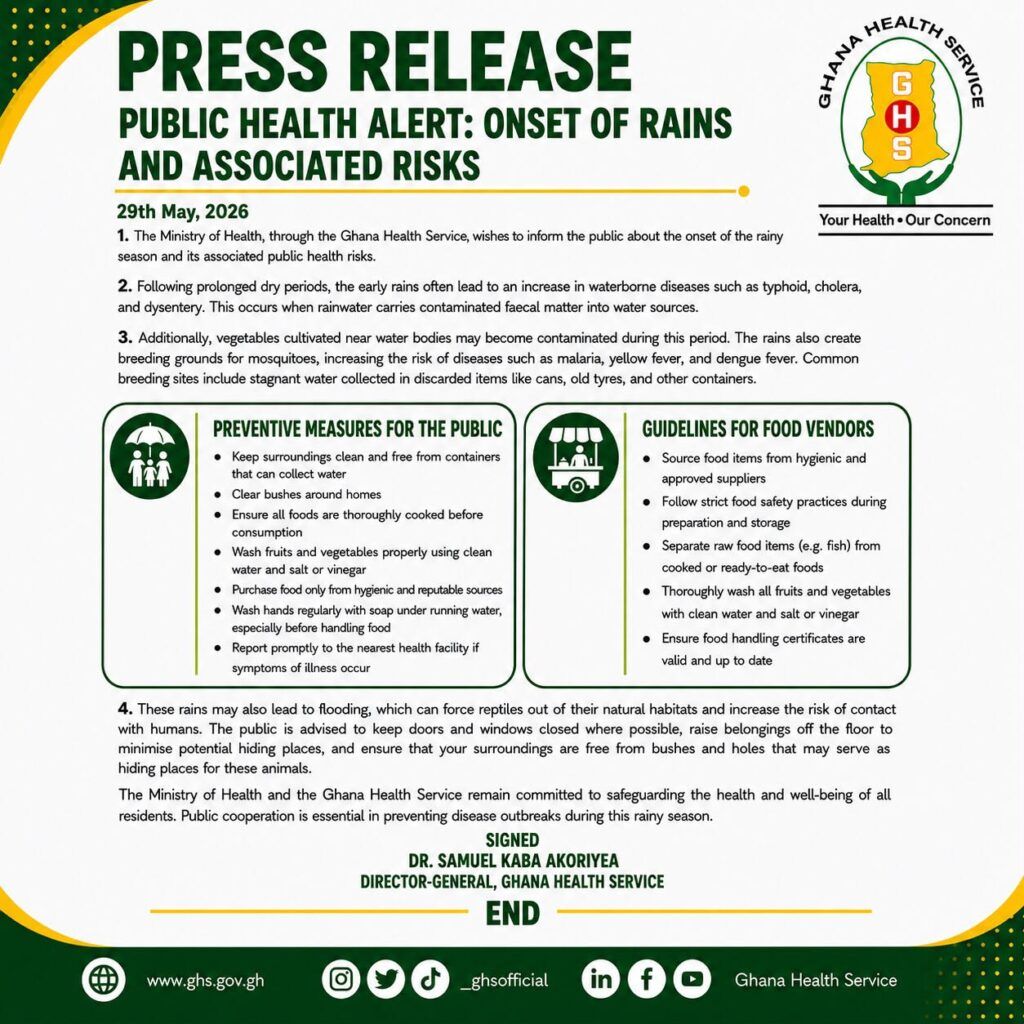
The Ghana Health Service (GHS) has renewed its warning over a possible surge in cholera, typhoid, dysentery, malaria and other water-related diseases as heavy rains and flooding continue to affect several parts of the country.
The Service says that, if not properly managed at the community level, current weather conditions could quickly create fertile ground for disease outbreaks, especially in flood-prone areas with poor sanitation systems.
Reissuing an earlier alert signed by its Director-General, Dr Samuel Kaba Akoriyea, the GHS explained that the first rains following a long dry spell often “wash contaminated faecal matter into water sources,” increasing the risk of waterborne infections. It also warned that vegetables grown near contaminated water bodies may become unsafe for consumption if not properly handled.
The Service further noted that stagnant water left behind after rainfall creates ideal breeding sites for mosquitoes, increasing the risk of malaria and other vector-borne diseases, such as yellow fever and dengue fever.
In response, the GHS is urging the public to take preventive steps, including clearing gutters and surroundings of waste, removing containers that collect rainwater, and ensuring that food is properly cooked before consumption. It also advised residents to wash fruits and vegetables thoroughly using clean water, adding salt or vinegar where necessary, and to maintain strict hand hygiene with soap under running water.
Food vendors have been strongly cautioned to follow strict hygiene standards. The Service urged them to “source food items from approved and hygienic suppliers,” ensure proper separation of raw and cooked foods, and maintain valid food handling certifications to reduce contamination risks.
The health authority also drew attention to a lesser-discussed danger linked to flooding, noting that rising waters can displace reptiles such as snakes into residential communities. It advised households to keep their surroundings clear of thick bushes and hiding places, raise household items off the floor where possible, and keep doors and windows secured during heavy rains.
“Public cooperation is essential in preventing disease outbreaks during this rainy season,” the Service said, stressing that community action remains key to reducing health risks.
The renewed alert comes as health officials intensify preparedness efforts for the peak of the rainy season. The Greater Accra Regional Health Directorate has set a target of zero cholera cases, while the Ministry of Health has indicated readiness to deploy vaccines if necessary.