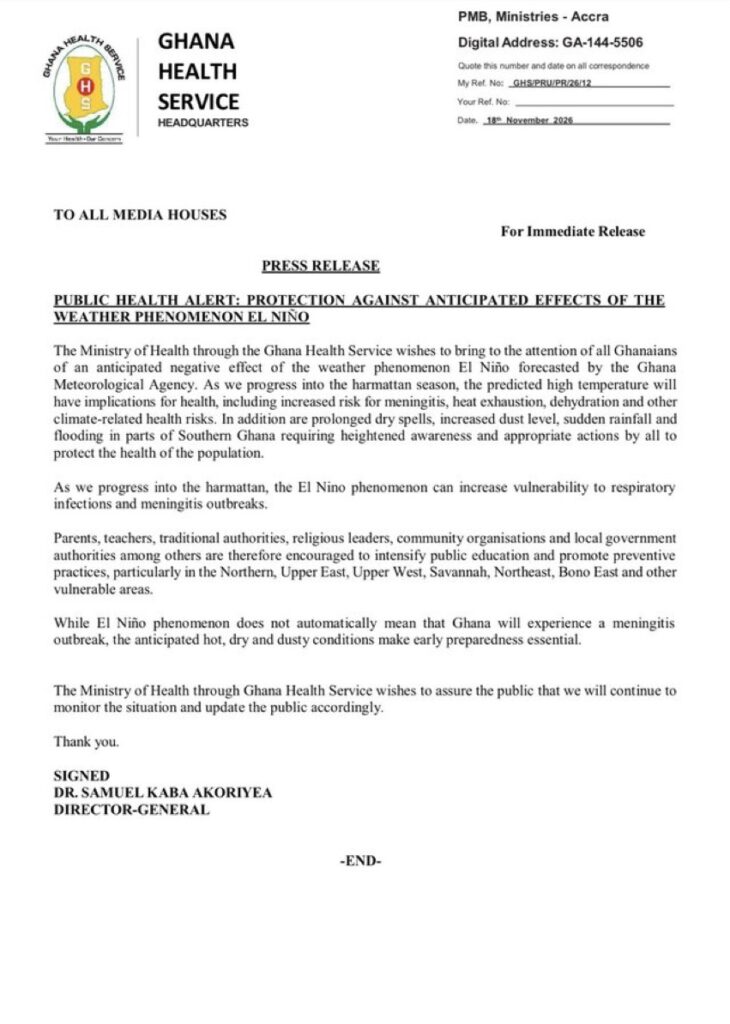




















The Ghana Health Service (GHS) has cautioned the public about potential health risks associated with the anticipated El Niño weather phenomenon, urging communities across the country to adopt preventive measures as Ghana enters the harmattan season.
The Ministry of Health, through the GHS, says the expected rise in temperatures, prolonged dry spells and increased dust levels could expose people to several climate-related health conditions, including meningitis, heat exhaustion, dehydration and respiratory infections.
In a public health advisory, the Service noted that the changing weather conditions could increase vulnerability to respiratory infections and meningitis, particularly in parts of northern Ghana.
It has therefore called on parents, teachers, traditional authorities, religious leaders, community organisations and local government authorities to intensify public education and encourage preventive practices.
The advisory specifically identifies the Northern, Upper East, Upper West, Savannah, North East and Bono East regions, alongside other vulnerable areas, as locations requiring heightened awareness and preparedness.
The GHS also warned that sudden rainfall and possible flooding in parts of southern Ghana could create additional public health concerns, requiring communities to remain alert and take appropriate precautions.
However, the Service was quick to clarify that the anticipated weather phenomenon does not necessarily mean Ghana will experience a meningitis outbreak.
“While the El Niño phenomenon does not automatically mean that Ghana will experience a meningitis outbreak, the anticipated hot, dry and dusty conditions make early preparedness essential,” the advisory stated.
The Service has consequently encouraged the public to take the necessary precautions to protect themselves and their communities against the possible effects of the changing weather conditions.
It also assured Ghanaians that it would continue to monitor the situation and provide updates as necessary.
The warning comes as the country prepares for the harmattan season, a period often characterised by dry weather, dusty winds and fluctuating temperatures, which can increase the risk of certain health complications.