
















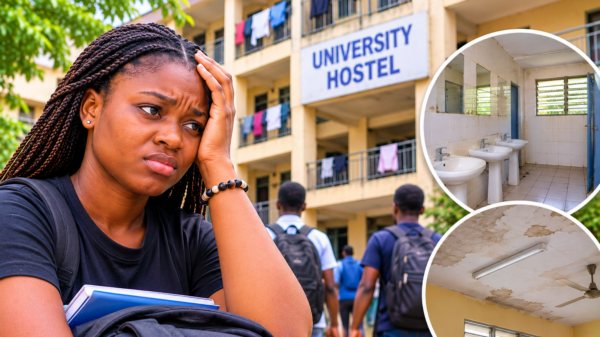








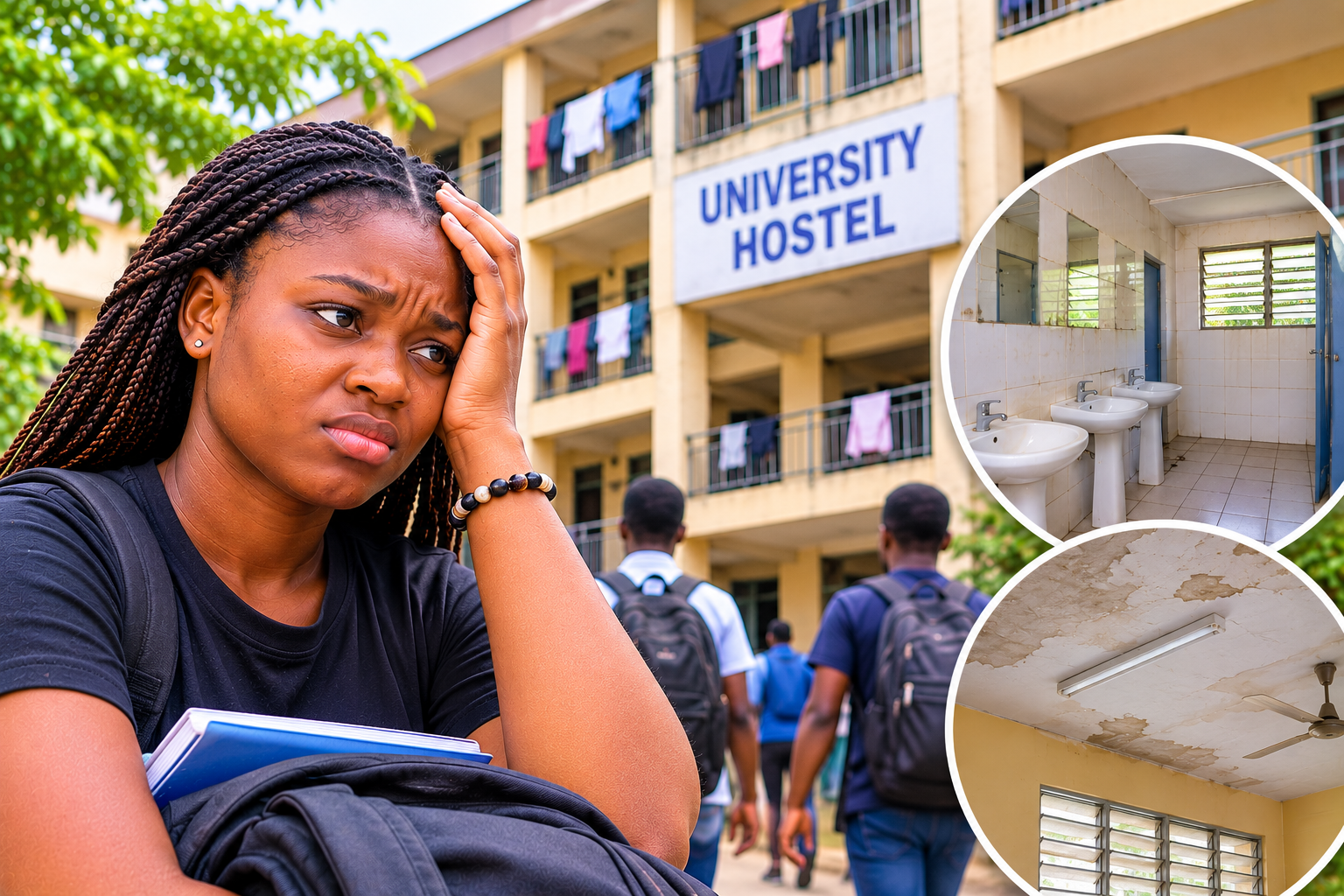
Before attending lectures, buying textbooks or preparing for examinations, many university students and their parents must first secure decent accommodation. For thousands of students across Ghana, finding a place to live has become an academic burden in its own right, as hostel fees rise despite growing concerns about the conditions of some facilities.
The question is simple: why should students pay thousands of cedis for accommodation that does not meet basic standards of decent living?
Recent inspections by the Rent Control Department have brought this concern into the spotlight. On November 17, Acting Rent Commissioner Frederick Opoku led an inspection team to the University of Ghana, Legon, where he raised concerns about the conditions of some hostels and the fees being charged.
At Alexander Adum Kwapong Hall, he questioned an annual accommodation charge of approximately GH¢8,050, citing defects in the washroom facilities, including broken louvres, and ventilation concerns.
Consider the figures. If four students occupying separate rooms each pay GH¢8,050, management could collect GH¢32,200 from those four rooms in a single academic year. Yet, the condition of some facilities leaves much to be desired.
And then came the comparison with Villagio. Did I hear that correctly? Are we serious as a country?
I watched the confrontation with considerable surprise. Villagio is a luxury residential development, while student hostels operate within a different accommodation market. Comparing their prices without considering occupancy, facilities, services and operating costs does little to address the concerns being raised.
The real question is not whether hostel charges are comparable to those of luxury apartments. It is whether the fees students are paying are justified by the quality of accommodation they receive.
What justifies GH¢32,200 in annual payments? How much of that revenue goes into maintenance? Why should students continue to live with broken facilities when accommodation fees keep increasing?
We must stop treating decent hostel accommodation as a privilege. A hostel is home to students for a significant part of their academic journey. It is where they sleep, prepare meals, study and recover after demanding days on campus. Functional washrooms, clean kitchens, proper ventilation, reliable water supply and a safe environment are basic requirements, not luxury additions.
To be fair, hostel operators and university accommodation managers also have financial responsibilities. Utility bills, security, sanitation, staff salaries, repairs and other operational costs must be covered. Investors who commit resources to providing student accommodation deserve reasonable returns.
However, making a profit must come with responsibility. Students should not be expected to pay premium prices while management turns a blind eye to poor maintenance and deteriorating facilities.
The disagreement involving UGEL and the Rent Control Department has also exposed the need for clarity on the regulation of hostel charges. While the Acting Rent Commissioner maintains that the Rent Act, 1963 (Act 220), gives the department the authority to assess rent and address suspected violations, UGEL has challenged that position. This disagreement deserves proper legal clarification, and all parties must respect the appropriate legal processes.
Ultimately, Ghana’s university accommodation crisis requires more than inspections and public disagreements. Universities, private hostel operators and the relevant regulatory institutions must take responsibility for ensuring that students receive value for the money they pay.
Students are not demanding Villagio apartments or five-star hotel services. They are asking for clean, safe, functional and properly maintained places to live while pursuing their education.
If thousands of cedis cannot guarantee students decent washrooms, proper ventilation and basic maintenance, then we must seriously question what exactly they are paying for.
Paying more should mean living better, not learning to tolerate worse conditions.