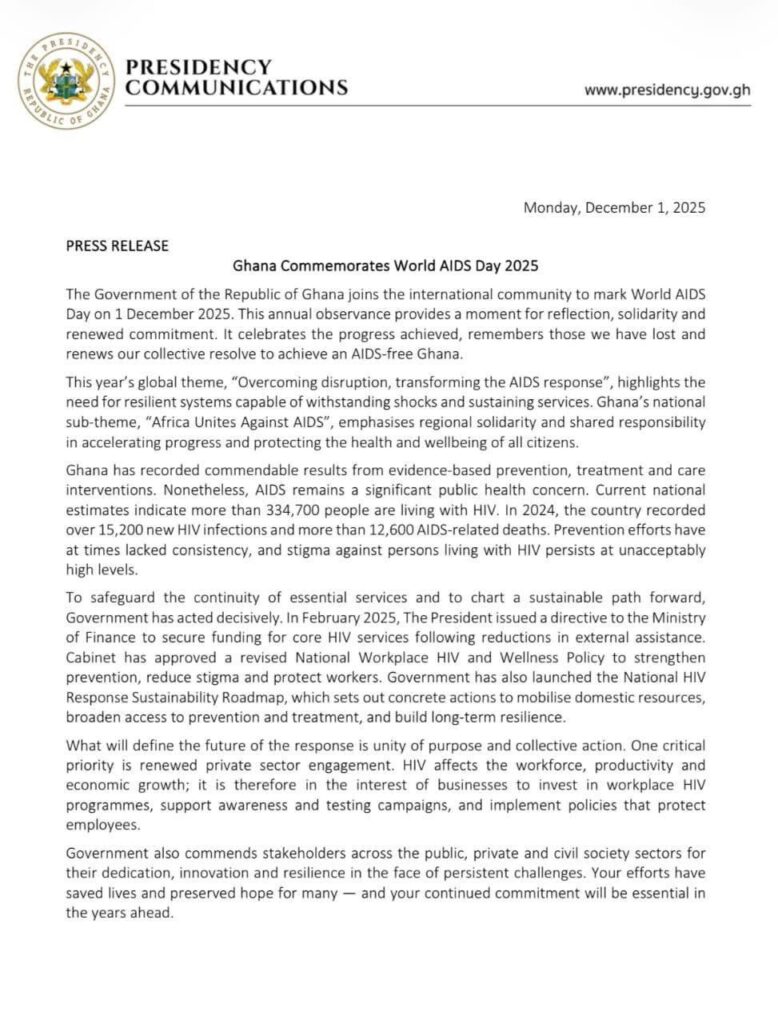
























The Government of Ghana has reaffirmed its commitment to achieving an AIDS-free nation as it joined the global community to commemorate World AIDS Day on December 1, 2025. This year’s observance provided a moment of reflection, remembrance and renewed action toward ending the HIV epidemic.
The global theme for 2025, “Overcoming disruption, transforming the AIDS response,” highlights the importance of resilient health systems that can withstand future shocks. Ghana’s chosen sub-theme, “Africa Unites Against AIDS,” reinforces the continent’s shared responsibility in accelerating progress and protecting public health.
In a national statement, the government noted that “Ghana has recorded commendable results from evidence-based prevention, treatment and care interventions.” Despite this progress, HIV remains a pressing public health concern, with new infections and AIDS-related deaths still at worrying levels.
Current national estimates show that more than 334,700 people are living with HIV, with over 15,200 new infections and 12,600 AIDS-related deaths recorded in 2024. Officials emphasised that while significant strides have been made, inconsistent prevention efforts and persistent stigma continue to undermine national progress. Stigma, the government stressed, remains “unacceptably high” and poses a major barrier to testing and treatment.
The government identified unity and collective action as the foundation of future success. One major focus is a renewed partnership with the private sector.
HIV, the statement noted, affects productivity and the broader economy, making it crucial for Corporate Ghana to invest in workplace HIV programmes, support testing campaigns and implement employee-friendly policies.
The government also praised the efforts of public institutions, private organisations and civil society groups, acknowledging their “dedication, innovation and resilience in the face of persistent challenges.”“Your efforts have saved lives and preserved hope for many,” the statement added.
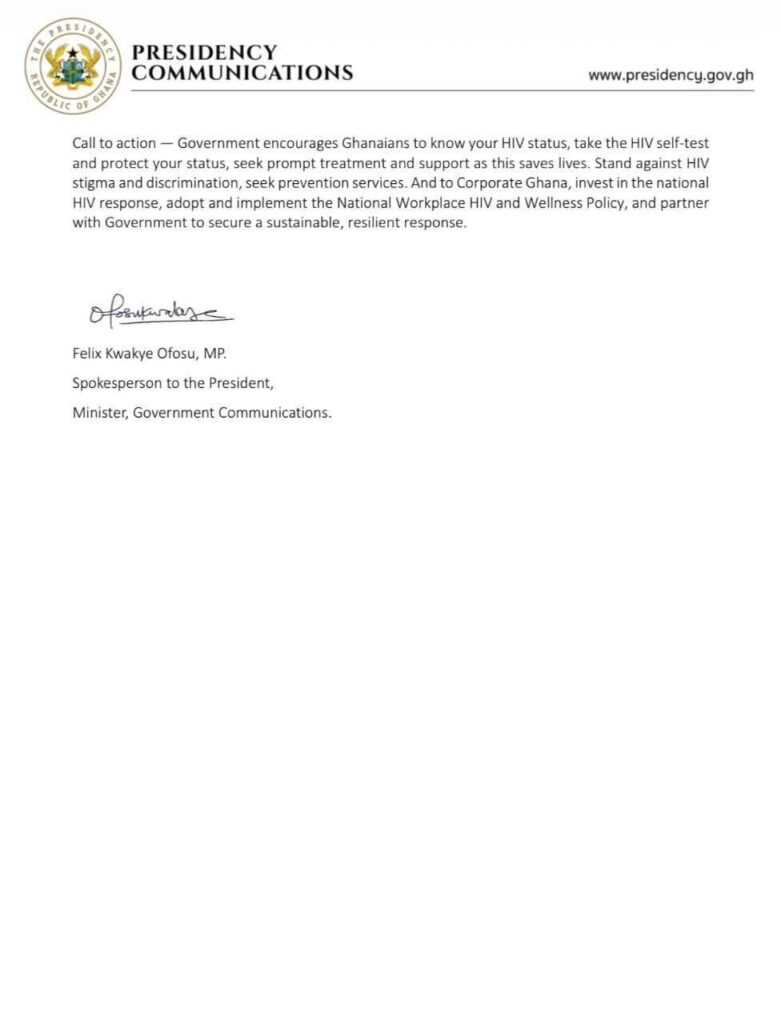
The government is urging all Ghanaians to take personal responsibility for their health by getting tested, using HIV self-test kits, seeking prompt medical care, and rejecting stigma and discrimination in all forms.
The statement concluded with a strong appeal to businesses across the country: invest in the national HIV response, adopt and implement the Workplace HIV and Wellness Policy, and partner with the government to build a sustainable and resilient HIV response.