
























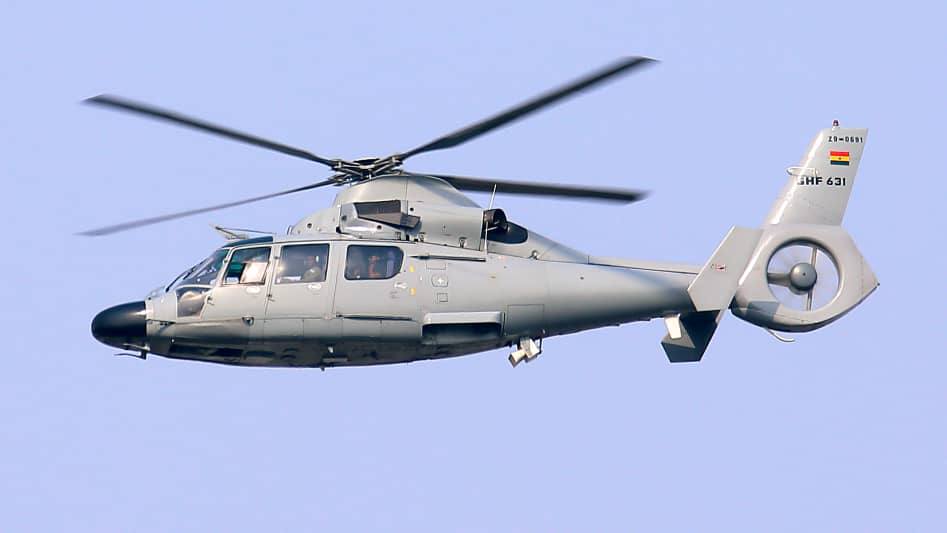
The final report on the August 6 helicopter crash that claimed eight lives, including two government ministers, has revealed that the tragedy was caused by a “sudden loss of altitude and lift due to downdraft.”
Presenting the findings, the Chief Investigator, Captain Fordjoe, explained that the aircraft lost altitude “without any change in power or pitch attitude,” a situation consistent with downdrafts caused by changing weather conditions over high terrain.
According to him, the helicopter departed Accra under visual flight rules in marginal weather and had an uneventful journey until it approached Obuasi, where visibility “deteriorated rapidly due to mist and low clouds.”
“At 9:56 a.m., the crew entered Instrument Meteorological Conditions (IMC), meaning they could no longer navigate visually and had to rely solely on the aircraft’s instruments,” he said.
Captain Fordjoe narrated that the pilots began to climb to clear rising terrain, but just moments before impact, they reported seeing high ground below and believed they had cleared it. “Suddenly thereafter, the helicopter that was flying up without any change in its power or pitch lost height and impacted a ridge line at about 1,370 feet above sea level, around six and a half miles from its destination,” he detailed.
The investigation concluded that while the helicopter was airworthy, it lacked certain modern safety systems that could have helped the pilots respond better to the situation.
“The helicopter was serviceable and declared airworthy,” Captain Fordjoe said. “However, it did not have some avionic safety equipment, including the enhanced ground warning system, automatic flight control system, and an autopilot. The crew had to manually fly the aircraft, which increased their workload. Despite all these, the craft was in good condition to fly.”
He further noted that a terrain awareness warning system, which could have provided predictive alerts about the rising ground ahead, was not installed on the helicopter.
The report emphasised that the crash was primarily due to the downdraft and reduced visibility conditions that made it difficult for the pilots to maintain lift and altitude while flying manually in challenging weather.