
















The New Patriotic Party (NPP) has criticised the government’s decision to reduce the regulatory margin on diesel by GH¢2 per litre for one month, arguing that the intervention does not amount to meaningful relief for consumers.
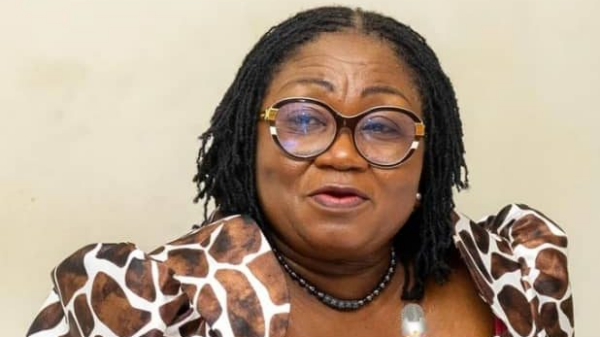
Co-Chair of the NPP’s Policy Committee on Energy, George Kwame Aboagye, made the comments at a press briefing on Wednesday, August 5, 2026.
According to him, the GH¢2 reduction should not be presented as an act of generosity because consumers have already been paying an additional GH¢1 levy on every litre of fuel for more than a year.
He argued that even if the full GH¢2 reduction is passed on to consumers at the pump, diesel prices would remain significantly higher than they were in January 2025.
“Even if the full two cedis reduction is passed through to the pump, diesel will still stand about 11.4 % above its January 2025 level.”
Mr Aboagye said the government’s intervention merely cushions part of the increase in fuel prices rather than reversing the burden on households and businesses.
“So let us be accurate about what this intervention is,” he said. “It cushions part of the increase that has already happened. It does not reverse it, and it does not return households and businesses to where they stood 18 months ago.”
He further questioned why consumers who have paid the GH¢1 levy on both petrol and diesel for over a year would receive a temporary reduction on diesel alone.
“A consumer who has paid one cedi extra on every litre of petrol and diesel for more than a year now receives at best two cedis back on diesel for a single month and nothing at all on petrol.”
The NPP Energy spokesperson insisted that the GH¢2 reduction should therefore be viewed as a temporary return of part of the money consumers have already paid rather than a new benefit.
“The two cedis reduction is not generosity. It is a partial temporary return to money already taken from consumers at midnight while the levy that takes it continues to run.”
Mr Aboagye also raised concerns about the financial implications of the measure, arguing that the government must explain how the revenue loss will be absorbed.
He referenced an earlier diesel intervention which, according to him, resulted in about GH¢800 million in foregone revenue over two months, and estimated that the latest one-month measure could imply approximately GH¢400 million in foregone revenue.
“There is no free relief. The only question is who pays and when,” he said.
The NPP has consequently asked the government to clarify the source of funding for the intervention and its impact on the 2026 budget.
Among other things, the party wants the government to disclose which specific margins, levies, or taxes are being reduced to finance the GH¢2 diesel relief, and the total revenue expected to be lost.
The party also demands to know whether the measure was included in the 2026 budget and, if not, which expenditure will be cut to offset the cost.
The NPP further wants the government to explain how it will ensure that the reduction actually translates into lower transport fares and prices of essential goods.