





















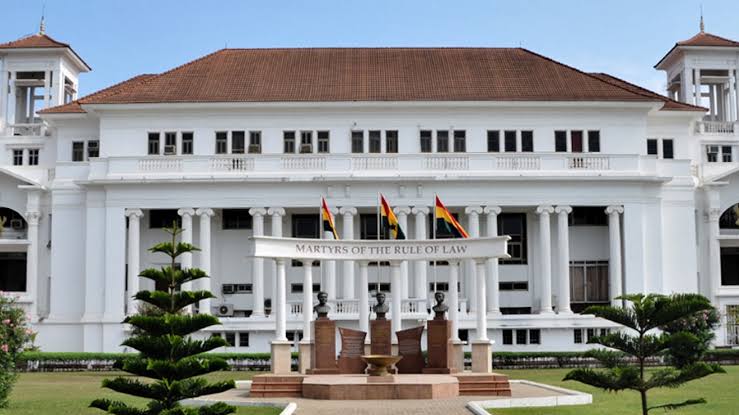
The Supreme Court has ruled that Ghana’s political parties can no longer use the delegate system to elect their executives and presidential candidates, ordering that all registered party members must be allowed to vote in internal elections.
In a split 5-2 majority decision delivered on Wednesday, the apex court held that restricting voting rights to a select group of delegates is inconsistent with the democratic principles enshrined in the 1992 Constitution.
The ruling follows a constitutional challenge filed by three senior politicians, former ministers Kwabena Frimpong-Boateng and Christine Amoako-Nuamah, together with veteran New Patriotic Party (NPP) member Nyaho Nyaho-Tamakloe. They argued that limiting internal elections to delegates violates Article 55 of the Constitution, which requires political parties to organise and operate in accordance with democratic principles.
The Attorney-General supported the suit, maintaining that the delegate system was incompatible with the Constitution. However, two of the seven justices dissented, although the reasons for their disagreement will only become known after the court releases its full written judgment.
The decision is expected to reshape internal party elections in Ghana significantly. For decades, both the governing National Democratic Congress (NDC) and the opposition New Patriotic Party (NPP) have relied on delegate conferences to elect national and constituency executives as well as presidential candidates.
With the ruling, political parties may now be required to allow every registered member to participate in such elections, potentially expanding the electorate from a few thousand delegates to millions of party members nationwide.