

















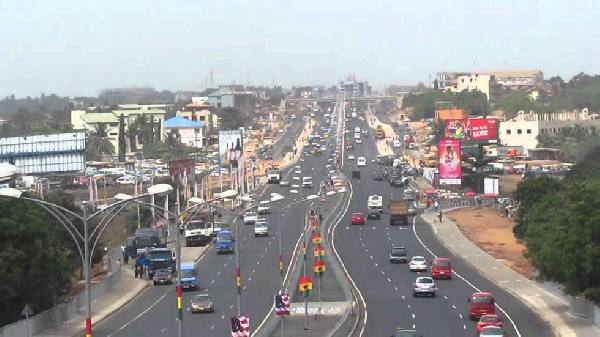
Ghana is set to witness a historic transformation in its road infrastructure as the government announces plans to construct the country’s first-ever purpose-built expressway linking Accra and Kumasi. The project, captured in the 2026 Budget Statement presented to Parliament on Thursday, November 13, marks a bold step toward modernising Ghana’s transport network and boosting national productivity.
Described as the flagship of President Mahama’s “Big Push” infrastructure programme, the Accra–Kumasi Expressway will be Ghana’s first fully modern, six-lane, bi-directional Class expressway, a highway worthy of a nation on the rise.” Stretching 198.7 kilometres, the expressway will become the new economic spine of the country, connecting the capital to Kumasi, the vibrant commercial heartbeat of the Ashanti Region.
One of the most remarkable features of the project is its brand-new alignment, which reduces the current travel distance between the two cities by more than 50 kilometres, cutting it down from 250km to just under 199km. According to the budget statement, this new alignment is expected to drastically cut travel time by half and reduce transportation costs by nearly 40%.
Beyond travel efficiency, the project promises massive job creation. The government estimates that over 30,000 direct and indirect jobs will be created during its construction, offering opportunities for engineers, artisans, suppliers, and thousands of young people ready to contribute to national development.
But the expressway is not just a transport route; it is envisioned as a “catalyst for transformation.” The project is expected to spark the development of new industrial parks, logistics hubs, storage facilities, and service economies along its path, bolstering Ghana’s competitiveness and supporting the emerging 24-hour economy.
To ensure seamless connectivity, the expressway will feature eight major interchanges located at Accra Hub, Adeso, Esamankese, Akyem Oda, Ofuase, Lake Bosomtwi area, and Kumasi. These interchanges, the statement notes, will help create “a network of seamless movement and connectivity.”
Additionally, the project includes three major river-crossing bridges over the Birim and Prah rivers and four ultramodern service areas equipped with emergency medical centres, fire stations, rest stops, fuel stations, EV charging points, and 24-hour security and lighting.
To support efficient revenue mobilisation, two modern toll plazas, one in Accra and one in Kumasi, will each feature 20 automated lanes, ensuring minimal delays and smooth toll operations.
The government emphasised that the Accra–Kumasi Expressway is more than a construction project; it is a symbol of ambition. As captured in the budget statement, “The Accra–Kumasi Expressway is not just concrete and asphalt. It is a bold statement of intent, a promise to build faster, connect deeper, and transform Ghana’s future.” Once completed, the expressway is expected to reshape mobility, unlock new economic activity, and significantly open up the nation, ushering Ghana into a new era of modern infrastructure and strategic connectivity.