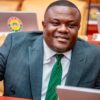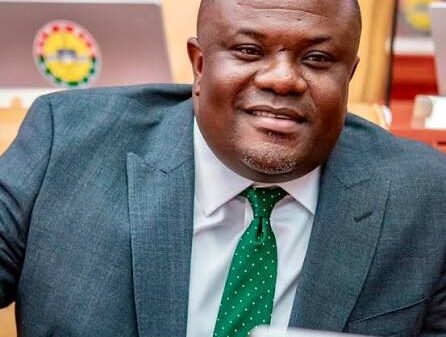
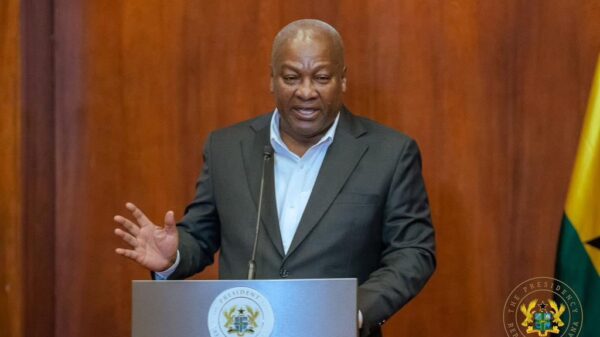
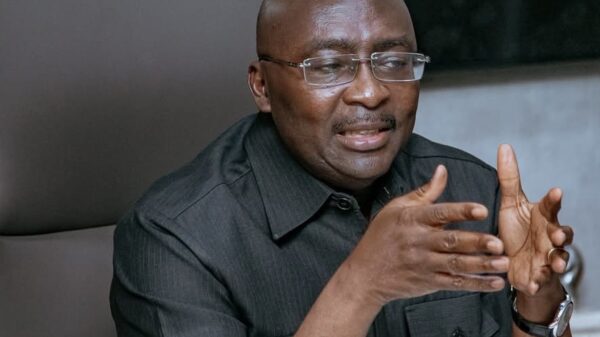

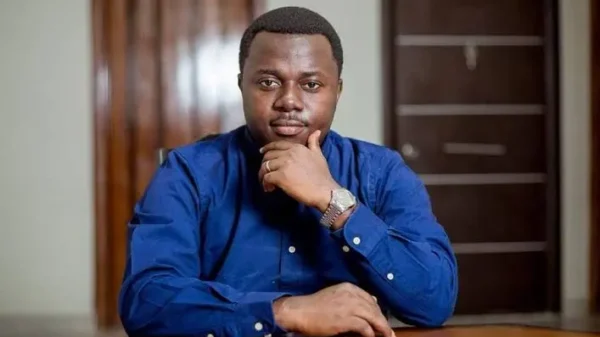










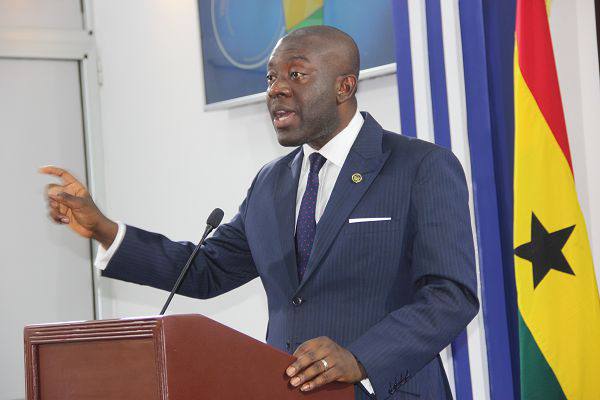
Kojo Oppong Nkrumah, the Member of Parliament for Ofoase Ayirebi, has praised the current Mahama-led administration for maintaining some of the key economic programmes introduced under the previous Akufo-Addo government, especially the Gold Purchase Programme. However, he was critical of the government’s overall revenue mobilisation strategy, describing it as a failure.
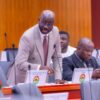
Speaking on the floor of Parliament during the debate on the 2025 Mid-Year Budget Review on Monday, July 28, the former Information Minister pointed out that despite the political divide, it was important to recognise progress where due.
“I commend the government for continuing with the gold purchase programme,” he said. “It was the gold purchase programme that moved us from 8.7 tonnes of gold to 30 tonnes of gold when we started.”
Oppong Nkrumah credited the programme with helping to stabilise the Ghanaian cedi, which he said has appreciated by about 42% in recent times. He noted that even members of the Majority, including Deputy Majority Leader Ricketts Hagan, had admitted that backing the cedi with gold has played a crucial role in the currency’s current performance.
“Among other things is the fact that we are backing our currency with gold,” he stated. “The Bank of Ghana is still here. The PMMC is what you’ve rebranded as the Gold Board. And so I give you commendation for continuing the gold purchase programme.”
In addition to the Gold Purchase Programme, he also lauded the government for continuing the inflation reduction policy initiated under the previous administration, which saw inflation drop from 54% to 23% before the change in government.
“The central bank started the tight monetary policy aimed at bringing us down,” he recalled. “That was what brought inflation down, and as you came, you are continuing.”
Despite these commendations, Oppong Nkrumah did not hold back in his criticism of the government’s failure to meet its revenue targets. He reminded Parliament that the Finance Minister had promised to raise over GH¢102 billion in revenue without introducing new taxes, a goal that has not been achieved.
“The Minister clawed back about GH¢11 billion swept from 31st December and then introduced eight new taxes to try to close that gap,” he said. “Despite that, revenue has underperformed by GH¢3 billion. The strategy has failed.”
He cautioned against interpreting under-spending as fiscal discipline, explaining that the government’s reduced expenditure was not the result of prudent financial management but rather a failure to generate enough revenue to fund its plans.
“There’s a difference between fiscal discipline and a failure to meet fiscal targets,” he stressed. “When you fail to raise the revenue and you fail to spend, that’s not fiscal discipline.”
Oppong Nkrumah ended his submission by warning that this fiscal shortfall could have serious implications for the delivery of essential public goods and development projects across the country.