




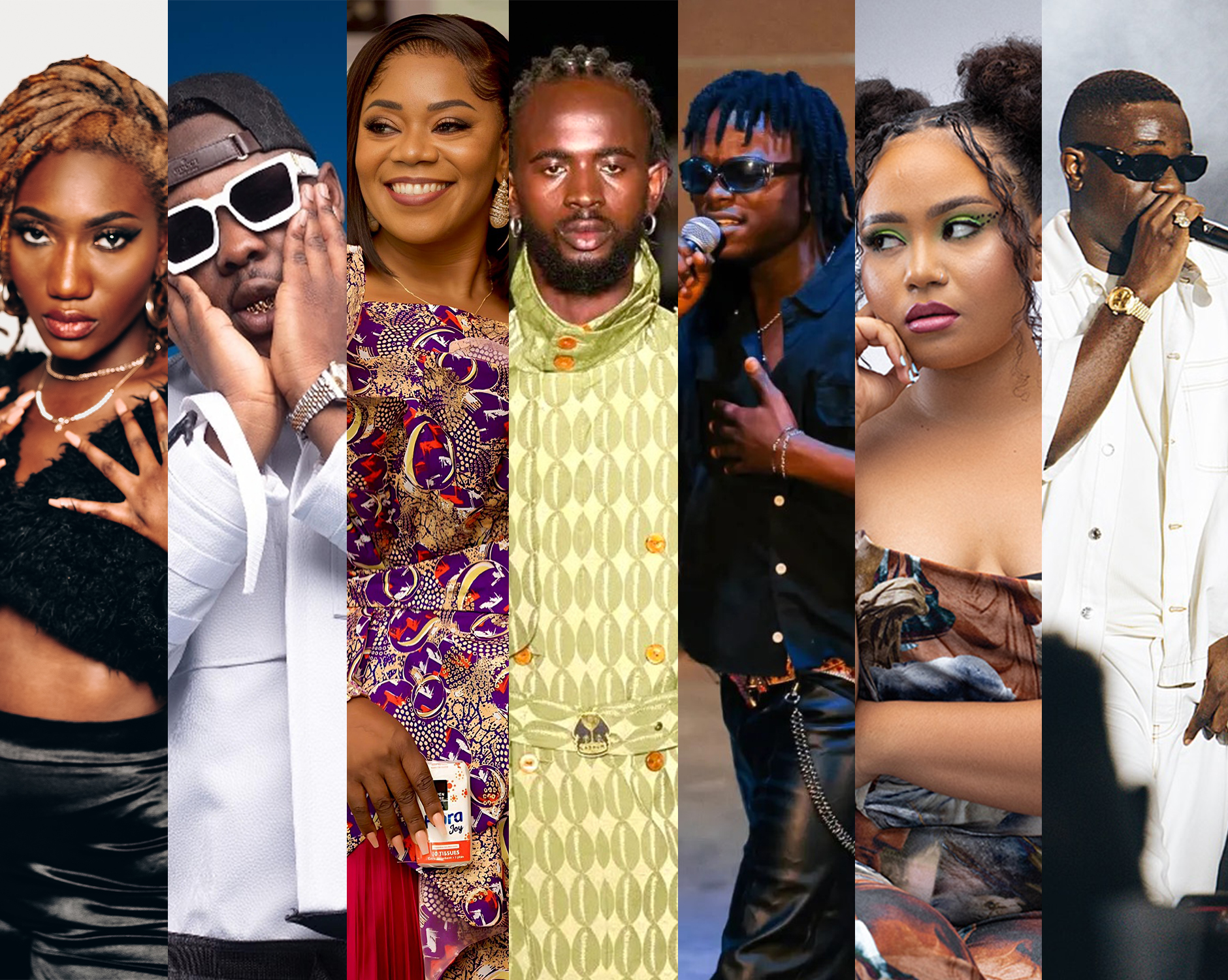
For years, the Telecel Ghana Music Awards 2026 has been regarded as Ghana’s biggest celebration of musical excellence. But this year’s ceremony felt different. Beneath the lights, expensive outfits, emotional speeches and viral performances lay something deeper, a silent power shift unfolding right before the industry’s eyes.
Some artistes left the night as undisputed winners.
Others were left with uncomfortable questions.
And for a few legendary names, the biggest headline was not what they won, but what they failed to win.
The 27th TGMA may go down as the night Ghanaian music officially announced the arrival of a new order.
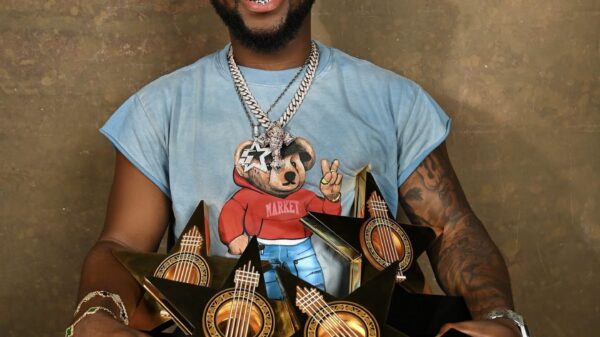
At the heart of that revolution was Black Sherif.
Winning five awards in one night was not just impressive; it was symbolic. Black Sherif did not merely dominate the TGMA. He dominated the entire conversation around Ghanaian music. From streaming numbers to fan loyalty, international visibility and emotional storytelling, the young superstar has now positioned himself in a space few artists currently occupy.
What makes his rise even more fascinating is how quickly he has transformed from a “street breakthrough act” into arguably the most influential Ghanaian musician of his generation.
There was a time people questioned whether Black Sherif could maintain the momentum after his explosive rise. But TGMA 2026 may have buried those doubts permanently. He is no longer chasing the industry. The industry is now revolving around him.
Yet while Black Sherif stole the spotlight, Medikal quietly reminded Ghana that survival in the music business is an art form on its own.
Winning four awards after enduring criticism, controversies, and repeated doubts about his relevance is no ordinary comeback story. Medikal has mastered something many artists fail to understand: visibility matters just as much as talent.
Even when the industry debates him, the streets still play his music.
Even when critics question him, his fanbase continues to grow.
That consistency has now translated into TGMA success once again, forcing many people to reconsider where Medikal truly stands within Ghana’s rap hierarchy.
Then came one of the night’s most meaningful victories, Wendy Shay winning an award despite years of public criticism and relentless online attacks.
For Wendy Shay, one award carried the emotional weight of five.
Since entering the Ghanaian music scene, she has faced mockery, comparisons, cyberbullying and constant pressure to prove herself. Yet she remains standing. In many ways, Wendy Shay’s career represents one of the strongest examples of resilience in Ghana’s entertainment industry.
Her TGMA recognition was not simply about music. It was about endurance.
Meanwhile, Kofi Kinaata once again proved that substance still has a place in Ghanaian music.
His two awards reinforced what fans have said for years, that Kinaata remains one of the finest songwriters the country has produced in modern times. While many artistes chase trends and controversy, Kofi Kinaata continues to rely on pure lyrical depth, storytelling and relatable content.
In an era dominated by viral moments and social media hype, his consistency feels almost old-fashioned and perhaps that is exactly why people respect him so much.
The night also belonged partly to Kojo Blak and Moliy, who both grabbed two awards and further announced themselves as serious players in Ghana’s next musical generation.
Their victories highlighted something the industry can no longer ignore: Ghanaian music is changing rapidly, and younger artistes are no longer afraid of competing with established stars.
The digital age has changed everything.
Today, an artist can build a fanbase globally through TikTok, streaming platforms and internet culture before traditional media even notices them. Moliy especially represents this new globalised version of African stardom, less dependent on local validation and more connected to worldwide digital audiences.
But perhaps no result sparked more debate than Stonebwoy winning just one award.
For an artist with his influence, international recognition and loyal fanbase, the outcome naturally raised eyebrows. Stonebwoy remains one of Ghana’s biggest musical exports, so anytime his award tally appears low, discussions are inevitable.
Was this simply a stronger year for competitors?
Did the academy and fans lean more toward newer sounds?
Or is the industry gradually entering a phase where dominance is becoming more fragmented?
Whatever the case, Stonebwoy’s legacy remains untouchable. But TGMA 2026 also proved that legacy alone is no longer enough to guarantee award dominance.
And then there was the biggest shock of all, Sarkodie leaving without a single award as a nominee for Artist of the Year, which clearly means he has more than one nomination. So what really happened?
For one of the most decorated and respected artistes in Ghanaian music history, the silence surrounding his name throughout the night felt almost surreal. Sarkodie has spent over a decade shaping Ghana’s rap culture and influencing an entire generation of musicians.
But music evolves brutally.
Audiences change.
New stars emerge.
And no throne stays protected forever.
Sarkodie’s zero-win night may not define his legacy, but it certainly reflects how competitive Ghana’s music industry has become. Younger artistes are no longer intimidated by legendary names. They are coming for the spotlight directly.
Beyond the trophies and social media debates, TGMA 2026 exposed a deeper reality about Ghanaian music.
The industry is undergoing a generational transition.
The old guard still commands respect, but the new generation now controls much of the energy, online conversation and youth culture. Fans are rewarding artists who remain emotionally relatable, digitally active and culturally connected.
This year’s TGMA also revealed how unpredictable the industry has become. Fame alone is no longer enough. Reputation alone is no longer enough. Artists now need consistency, strategy, reinvention and strong audience connection to survive.
Because after TGMA 2026, one thing became painfully obvious:
In Ghana’s music industry today, nobody’s position is permanently safe anymore.
| CATEGORY | ARTIST | SONG |
| BEST HIPLIFE SONG MOST POPULAR SONG OF THE YEAR COLLABORATION OF THE YEAR BEST HIPLIFE / HIPHOP ARTISTE | Medikal | Shoulder |
| BEST HIGHLIFE ARTISTE | Kofi Kinaata | |
| BEST AFROBEATS / AFROPOP ARTISTE | Wendy Shay | |
| BEST GOSPEL ARTIST | Diana Hamilton | |
| BEST NEW ARTIST | Kojo Blak | |
| INTERNATIONAL COLLABORATION OF THE YEAR | Moily | Shake it to the max RMX |
| BEST TRADITIONAL GOSPEL SONG | Piesie Esther | Nyame Ye |
| BEST URBAN /CONTEMPORARY GOSPEL SONG | Kofi Owusu Peprah | Big God Afro |
| BEST HIGHLIFE SONG | Kofi Kinaata | It is finished |
| BEST REGGAE/DANCEHALL SONG | Moliy | Shake it to the max RMX |
| BEST HIPHOP SONG BEST AFROPOP SONG ARTISTE OF THE YEAR SONG WRITER OF THE YEAR Album/EP of the Year | Black Sherif | WHERE DEM BOYS Sacrifice Sacrifice Iron Boy |
| RECORD OF THE YEAR | Kwabena Kwabena | Enso Nyame Y3 |
| BEST FEMALE VOCAL PERFORMANCE | Enam | Amin |
| BEST MALE VOCAL PERFORMANCE | Asiama | Akoma |
| BEST RAP PERFORMANCE | Strongman | Mensei Da |
| BEST MUSIC VIDEO | AratheJay | Put am on God |
| BEST REGGAE / DANCEHALL ARTISTE | Stonebwoy | |
| AUDIO ENGINEER OF THE YEAR | Daniel Grüll | Enso Nyame Y3 |
| BEST GROUP | Keche | |
| MUSIC FOR GOOD | Lali x Lola | Crox it Out (Breast Cancer) |