


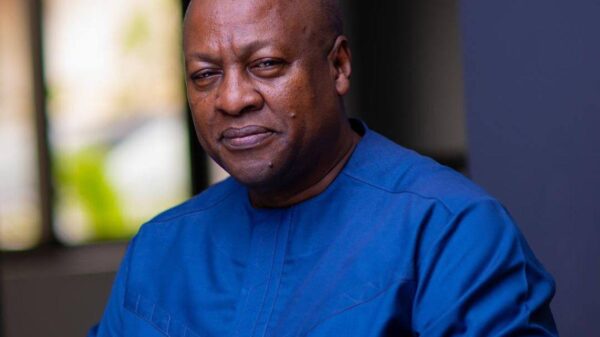













President John Dramani Mahama has declared that his administration’s economic policies have restored stability to the Ghanaian cedi, insisting that the government focused on strengthening the local currency rather than attempting to artificially control the US dollar.
Delivering his State of the Nation Address in Parliament on Friday, February 27, the president said exchange rate volatility had for years been a major source of hardship for Ghanaian households and businesses.
“To our nation’s 3.7 million car owners and the tens of millions of Ghanaians who depend on transport daily, Mr Speaker, to the interesting part. Exchange rate volatility has long been at the heart of hardship in Ghanaian households,” he stated.
He explained that his government made currency stability a top priority upon assuming office and has delivered tangible results.
“We made currency stability a priority. And Mr Speaker, we have delivered. Mr Speaker, we did not arrest the dollar. We strengthened the cedi to put up a good fight against the other currencies,” President Mahama told Parliament.
According to him, the cedi has recorded significant gains against major international currencies. “I am pleased to report to this House that the cedi appreciated by 40.7 percent against the US dollar, by 30.9 percent against the British pound, and by 24 percent against the euro,” he announced.
President Mahama described Ghana’s economic recovery as broad-based and comprehensive, stressing that improvements have been recorded across all sectors within his administration’s first year in office.
“Ghana’s economic turnaround is broad-based and comprehensive. All sectors of the Ghanaian economy have witnessed remarkable improvements in our first year in office,” he said.
He further revealed that Ghana’s economy has, for the first time, surpassed the 100 billion dollar mark and is projected to place the country among the top 10 largest economies in Africa.
Touching on external reserves, the President disclosed that Ghana’s reserves have increased significantly. “Our reserves currently stand at 13.8 billion dollars, up from 8.9 billion dollars at the end of 2024. This covers 5.7 months of import,” he added.