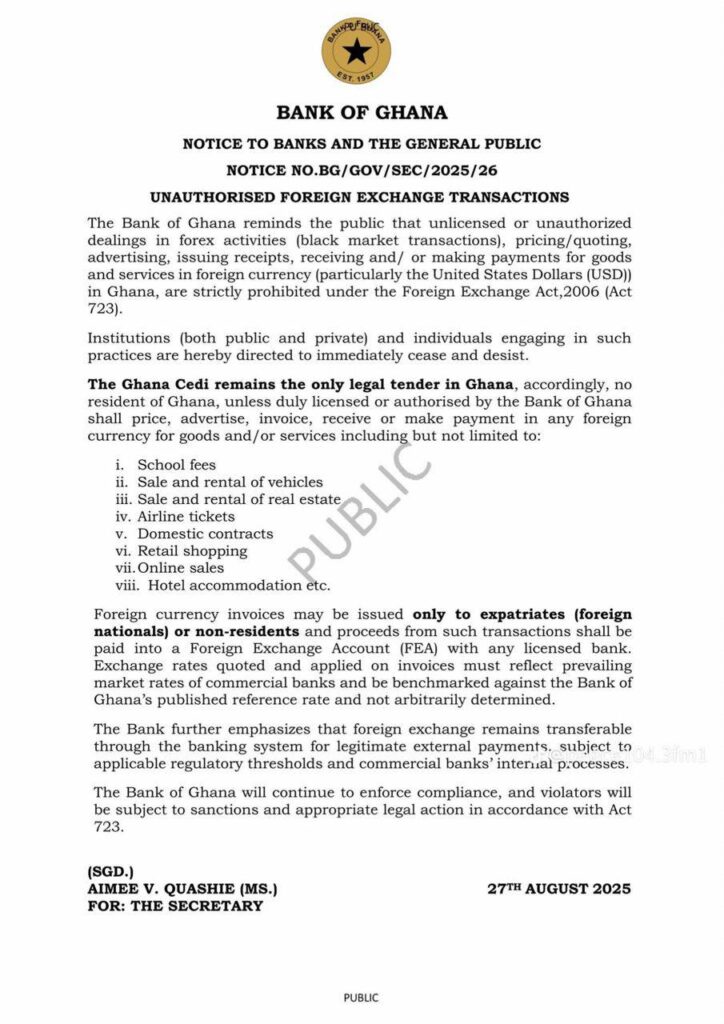




















The Bank of Ghana has reiterated its stance on using foreign currency in local trade, warning that all unauthorized forex transactions are still illegal under the Foreign Exchange Act, 2006 (Act 723).
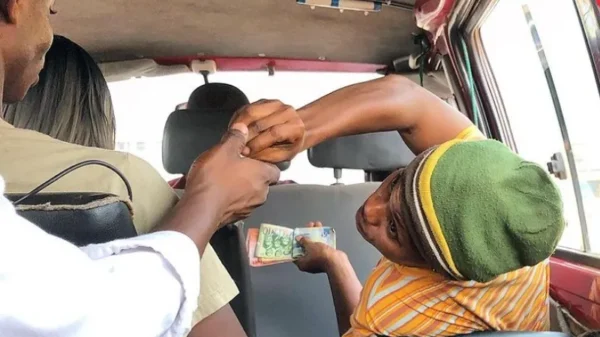
In a statement dated August 27, 2025, the Central Bank noted: “Unlicensed forex activities, including black market transactions, pricing, advertising, issuing receipts, and making or receiving payments in foreign currency, particularly in US dollars, remain strictly prohibited in Ghana.”
The Bank said the Ghana cedi remains the sole legal tender for transactions in the country, adding that no resident is allowed to charge, advertise, or accept payments in foreign currency without approval from the Bank of Ghana. It pointed to common violations in sectors such as education, vehicle sales and rentals, real estate, airline tickets, domestic contracts, retail shopping, online sales, and hotel accommodation, warning that all such payments must be done strictly in cedis.
The BoG, however, explained that expatriates and non-residents may be issued invoices in foreign currency, but proceeds must be deposited into a Foreign Exchange Account (FEA) with licensed banks. It added that exchange rates used in such transactions must reflect commercial bank market rates and align with the Bank’s reference rate.
Reassuring the public, the Bank stressed that access to foreign exchange for legitimate external payments is still available through the banking system, subject to regulatory thresholds and internal procedures.
The notice concluded with a warning that offenders will face sanctions: “The Bank of Ghana will continue to enforce compliance, and violators will be subject to sanctions and appropriate legal action in accordance with Act 723.”